Expectations, Great Expectations

Expectations, Great Expectations

I was a new bride, newly pregnant, when my mom-in-law brought me some chaat. As we sat eating, she kept looking at me, almost expectantly. I could sense her disappointment but couldn’t quite understand why.

Now, 36 years later, I think I do.

I could have thanked her for being so thoughtful. I could have told her how delicious the chaat was, how much I was enjoying it. But my blissfully oblivious younger self simply didn’t think to say any of it.

I was enjoying the chaat. She was waiting to hear that I was. And somewhere between my unspoken pleasure and her unfulfilled expectation lay a small disappointment. One that has stayed with me for 36 years.

*

Most disappointments, I have come to realize, begin with an expectation.

It is when we expect that we are disappointed.

A simple enough truth. One we all know and yet spend an entire lifetime failing to learn.

We continue to expect.

We expect affection, attention, consideration. Gratitude for what we give, appreciation for what we do, and love in return for the love we offer.

We write little scripts for the people in our lives. What they should say. How they should respond. What they should remember. How they should make us feel.

And when they fail to follow the script, we feel hurt, neglected, sometimes even unloved. We mistake the absence of expression for evidence that we matter less than we believed. But instead of speaking up, we swallow the disappointment and carry on. Or so we think.

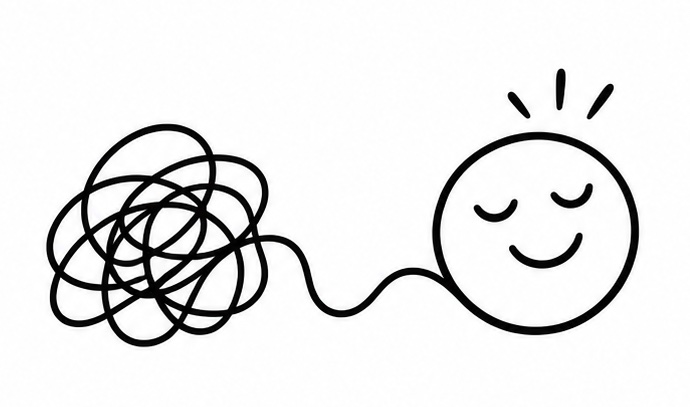
For disappointments have a way of quietly accumulating.

Somewhere in our minds, we begin to keep account. Entries are made. Balances calculated. Debts accumulated. And one day, something quite insignificant becomes the final entry.

A forgotten birthday. An unanswered message. An invitation that never came.

And suddenly, years of accumulated disappointment come tumbling out.

We lash out. We accuse. We withdraw. We revisit old wounds and summon forgotten grievances. A small moment becomes a battlefield.

The anger eventually subsides, but the damage remains. Our dignity compromised. Our relationships bruised. Words spoken that cannot be taken back.

An expectation became a disappointment. The disappointment became resentment. And the resentment robbed us of something far more precious than whatever we had hoped to receive.

Our peace.

All because life did not unfold according to a script written entirely in our own heads.

And that, perhaps, is the great tragedy of expectations.

*

But then, is it really possible to live without expectations? Expectations, after all, are woven into the fabric of our relationships. They are part of what makes us human.

Perhaps the answer is not to give up expectations, but to learn to live with them differently.

We expect others to love us in our language, forgetting that they may be speaking an entirely different one. We forget that they are not us. They carry different histories, different insecurities, different ways of expressing and receiving love.

Perhaps we need to be a little less certain that our way is the only way. A little more generous in our interpretations of others. A little less quick to feel slighted.

To recognize that not every omission is an insult. Not every silence is indifference. Not every unmet expectation is a measure of how little we matter.

And perhaps, most importantly, to stop expecting people to read our minds. For how can we hold someone responsible for failing to fulfil an expectation they never knew existed?

Perhaps we cannot live without expectations. But we can learn to hold them a little more lightly.

To say what we feel. To express what matters to us. To ask for what we need rather than quietly resenting its absence. And when expectations go unmet, to forgive a little more generously.

And sometimes, simply to let go.

*

I think back to that afternoon, 36 years ago.

Perhaps I could have been a little more thoughtful, a little more expressive. And perhaps my mom-in-law could simply have asked whether I was enjoying the chaat. I would have happily told her that I was. Very much so. A few words might have made all the difference.

And perhaps this is what life teaches us, slowly, over the years. To expect a little less, understand a little more, and be grateful for what is already there.

For when we loosen our hold on what we expected, we begin to appreciate what we have been given.
The Lady with ‘THE BAT’

Like all mothers, I too have lived through those small but unmistakable moments when your child stops asking, “May I?” and instead says, with calm authority, “Trust me.”

One such humbling moment visited me again last month when Tanvi, our daughter, came visiting along with her four-and-a-half-year-old son Arham.

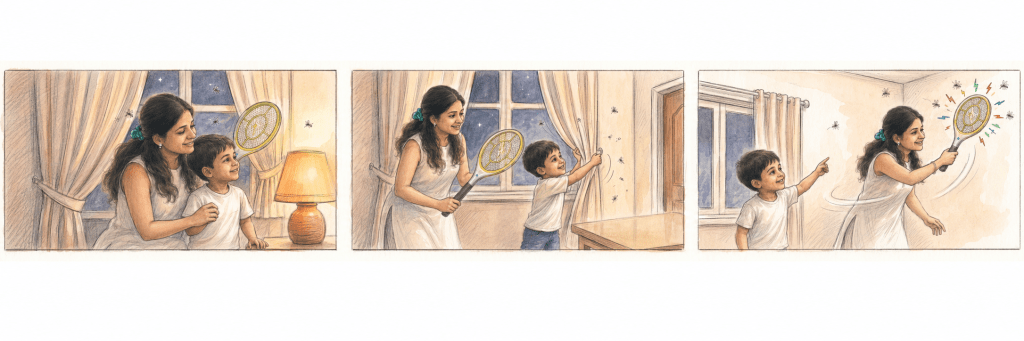
Mother and son soon fell into a pattern. Every evening, they would glide around the house; she, brandishing an electric mosquito bat — gently shaking curtains, peering into corners, scanning ceilings. The little one, eyes shining, pointing out the prey.

A slow-motion sway. A delicate flick of the wrist. And then —

Zzzzt.

A tiny spark.
A faint pop.

And then the triumphant whoops of mother and child, celebrating yet another glorious victory over the bloodthirsty mosquitoes of New Delhi.

*

And I would watch this dance of locate-flick-pop with considerable amusement…

Now trust me, I have survived Delhi summers.

I have clapped mosquitoes mid-air with my bare palms; flattened them with rolled-up newspapers and books; even hurled slippers at the arrogant ones perched high up on the ceiling.

Over the years, I have perfected the art of waiting in the dark, lying still as the buzz hovers just behind the ear… closer… closer… until —

Whack! Even if it lands on my cheek!

And then the quiet triumph of viewing the casualties in the morning — on walls, on the backs of books, the headboard, the bedsheet, the counters…

*

And now my daughter was telling me cheerfully, “Mom, you have been doing it wrong all your life.”

Wrong? Really?!

Why, one summer, when I was a teenager, my mosquito tally had reached the majestic figure of 525. Not bad, I said, for a season’s work.

“No. there’s no need to be so primitive, Mom. You need the electric bat. It’s so satisfying,” she declared with the utmost conviction.

*

Honestly, I must confess — I was impressed.

The first time I picked up the bat, I was hesitant. Then I heard that crackle.

Sharp. Decisive. Oddly musical.

And something inside me unlocked. Ah. So this is what justice sounds like.

Needless to say, I am undeniably hooked to this crackling, neon-lit, homicidal bat!

*

Indeed, the mosquito bat has altered the psychology of our household.

With the Bat in residence, the balance of power has shifted. Once, mosquitoes were the predators and we the prey. Now, as evening falls, I arm myself with the bat and the faintest buzz is met with calm confidence—and dealt with swiftly. Clinically. Best of all, there is no blood on my hands. Literally.

Undoubtedly, I am now the official Lady with the Bat.

*

And this is how, I realize, traditions evolve.

From rolled newspapers to rechargeable rackets.
From frantic swatting to strategic maneuvering.

Civilization, after all, is simply the story of better tools. And of course, wonderful daughters.

From Nothing to Something

From Nothing to Something

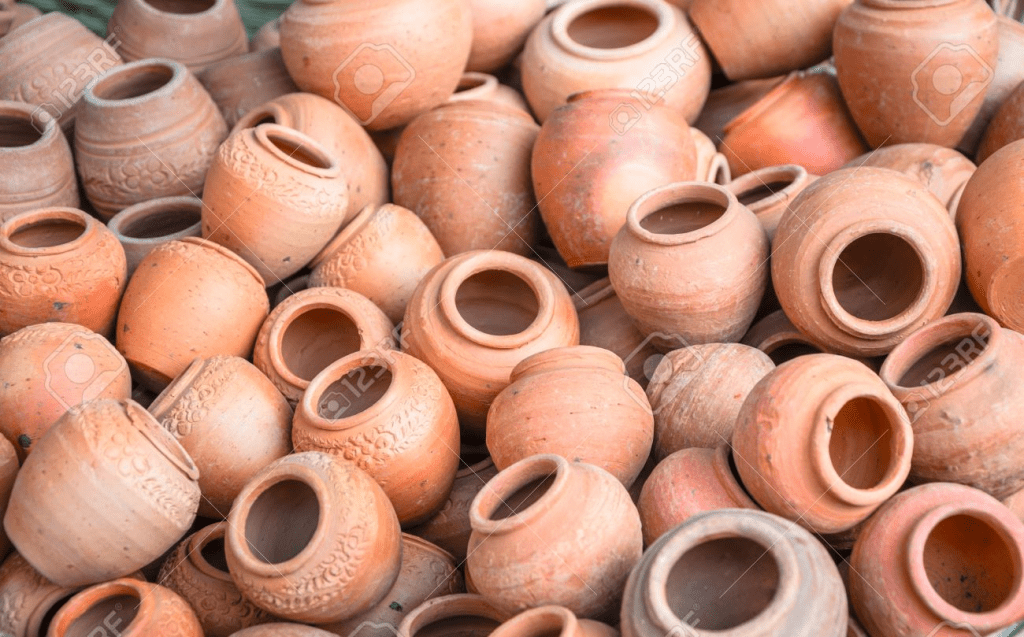
“Gently… gently,” the potter murmurs, as he guides me moulding the clay. My fingers follow his lead — a press here, a soft release there. The wheel spins, the clay rises, and slowly, a tiny pot takes shape. With a loop of string, I cut it free and hold it up, smiling with the quiet wonder of having made something. Something from nothing. Not perfect, not polished — but unmistakably mine.

Creation is like that. You begin with something raw, unformed. You work on it, and with time, it becomes something meaningful.

Creation is in sowing seeds and watching them push through the soil.

In nurturing children as they grow into themselves.

In turning a handful of ingredients into a meal that warms the table.

In arranging a room until it feels like home.

In filling a blank page with words.

In knitting a scarf or painting a canvas.

In growing an idea into a thriving venture.

In building relationships.

In shaping our own dreams into reality.

In each act, something shifts from nothing yet to something now. And no matter how often it happens, it never stops being wondrous.

We humans are, at our core, makers — not just of things, but of possibilities. This is our greatest shared heritage: a restless, hopeful urge to create, improve, and leave behind more than we found.

And we have carried this impulse across millennia. From shaping clay pots to building cities. From planting seeds in the soil to sending seeds into space. From stringing beads into necklaces to stringing satellites across the sky. From inventing the wheel to developing code that will power superintelligence.

And the wonder isn’t in the pot, the meal, or the invention — it’s in us.

In Praise of the ‘Nod’

In Praise of the ‘Nod’

I am sure the universe knows exactly what it’s doing when it brings people together. It rarely pairs like with like. More often, it brings opposites into the same orbit — people different in a hundred small ways, who, somehow, make perfect sense side by side.

Take my husband and me.

I like to share. Everything.
What I did. What I didn’t.
Who I met, what they said, what they didn’t (but clearly meant).

The blog I’m writing.
The butcher who messed up my order. The stray dogs in the colony. The cook who staged yet another dramatic exit. The cousin whose cousin is now somewhat famous…

And him?

He’s a man of few words.
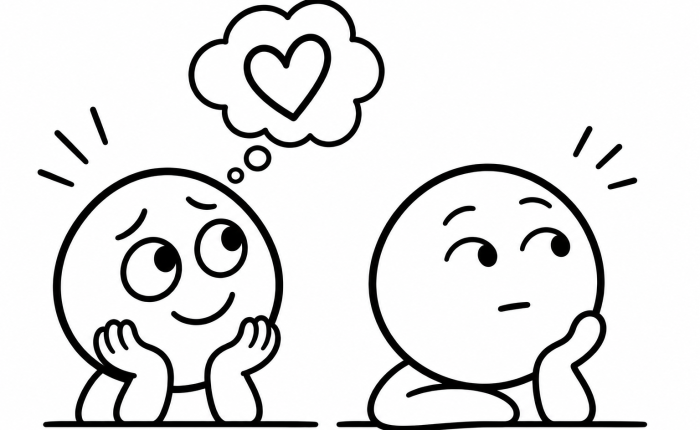
But… many nods.

Let’s be clear — these aren’t the tender, attentive, “yes, my dear, I agree” kind of nods.
These are the absent-minded, default nods — dispensed while checking emails, reading the news, or scrolling through WhatsApp groups.

Over the years, we’ve settled into a rhythm.
I talk. He nods.
I throw up my hands in mock exasperation.
And then — eventually — he looks up. Fully present. Curious. As if hearing it all for the very first time.

*

It’s not perfect. And yet — there’s something oddly comforting in this dance of words and nods.

Because I understand where his mind is… It’s somewhere between a delayed shipment at customs, a lost pitch, the latest dip in stock prices… and a hundred other quiet battles he fights daily.

And still — his nods, even if distracted, tell me something.
That my words have landed.
Somewhere. Softly. In that busy, burdened, but deeply dependable heart.

It’s hard to explain. It’s not logical.
But in those simple nods, I hear this:

“I know you need to say it.”
“I know it matters to you, even if it doesn’t matter to the world.”
“I trust your instincts, even if I missed the details.”
“And I’ll always be here, nodding along — because I love how your mind works, even if I can’t always follow where it’s going.”

It’s his way of showing up — with a nod.
The smallest, quietest act of partnership.

(Though at times, he does surprise me. Like the time he suggested we holiday in Bruges — something I must have mentioned, sometime, somewhere. He had remembered. Even if I’d forgotten.)

*

So here we are. All these years later.

Me, still talking.
Him, still nodding.

A marriage where one partner needs to speak — and the other gently makes space for it. And in these little spaces between our words and nods, we’ve built something whole.

And honestly?
That’s more than enough.