Everyday, Again

Everyday, Again

Every morning, my alarm rings at 5:45 a.m.
Monday to Friday. Without negotiation.

And just like that, the day begins.

A familiar sequence unfolds — the walk, the newspaper, breakfast, work, lunch, more work, dinner, a little television, sleep. Alarm. Again. Life hums along in a rhythm so predictable that we barely notice it anymore.

The weekend arrives like a soft breeze — light, liberating, promising freedom. And just as quietly, it slips away. By Sunday evening, Monday is already knocking, carrying with it structure, responsibility, and the weight of having to show up again.

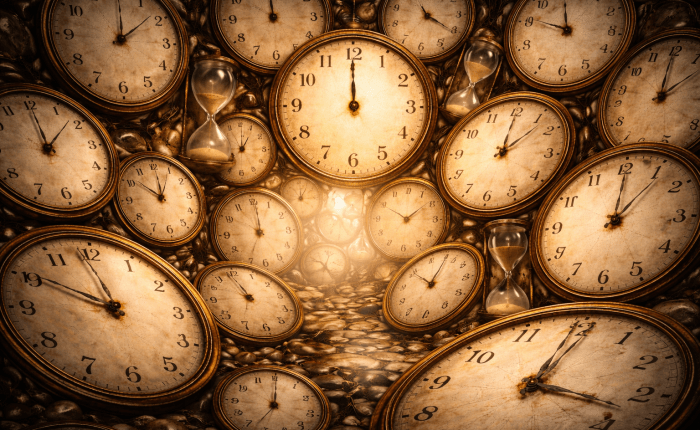
Days blur into weeks, weeks into months, months into years. And somewhere in this steady flow, life keeps moving — leaving us caught between who we want to be and who we must be.

And what do we long for?

The spark of something new. Unplanned trips. Impulsive decisions. Late-night laughter and midnight malts. A life led by desire rather than duty. A life where mornings feel like paintings and evenings read like poetry.

And in this hopeful pursuit of the extraordinary, we dismiss the life we already have. We call it ordinary. Boring. Routine. We grow impatient, irritable, restless — convinced that our real life is waiting somewhere else.

Routine, after all, isn’t glamorous. It looks like the same breakfast, the same walk, the same conversations. It feels unremarkable — as if life is on a continuous repeat.

And yet…

Why is it that we ache for routine precisely when it disappears?

A few days away from home, and we begin to miss our 6:30 a.m. cup of tea. That quiet, focused hour of work. The comfort of an early night. Even the most beautiful destinations slowly lose their charm. And after retirement, many of us find ourselves longing for the days when there was no time to think at all — when life moved us forward without asking too many questions.

So what is routine really giving us, that we only understand once it’s gone?

I found my answer looking out from a hospital window.

Outside, life was unfolding as usual. People rushing to work, arguing into their phones, buying fruits, laughing, hurrying somewhere important. In their utterly unremarkable busyness was an unexpected comfort: the quiet assurance that all was well. That their lives were moving as they should — without alarm, without worry, without urgency.

And that’s when it struck me.

Routine is not monotony.
It is evidence that things are fundamentally okay.

It means the world is not on fire.
Children are healthy. Parents are well. Relationships are steady. Life is quietly holding together.

Routine doesn’t just organize our days. It anchors us. It gives us direction. It gives us the space to plan, to hope, to dream — and to build anything meaningful: a career, a relationship, a life. It isn’t stagnation; it’s movement without panic. Progress without noise.

So the next time you catch yourself thinking, “Nothing special today,” pause. Nothing dramatic is happening. And that — quietly, beautifully — is what makes the day special. It allows us to trust in another tomorrow.

True, routine is simply okay.
And okay, I’ve learned, is a beautiful place to be.
I hear my body talk to me ~ A Surya Namaskar conversation

I hear my body talk to me ~ A Surya Namaskar conversation

“Finally.” My body remarks sarcastically as I unroll the yoga mat. “Thought you could ignore me forever?”

I sigh. The moment has come – a long overdue reckoning. Years of slouching, scrolling, and slothfully avoiding movement have left my body stiff, shriveled, and simmering with resentment. I pretend not to hear the sarcasm. Instead, I take a deep breath and mentally map out the steps of Surya Namaskar before getting going.

Breathing deeply, I fold my hands in the Prayer Pose. My palms press together, my feet ground into the floor, and I hear my body scoff, “Oh, we are doing this now?”

I inhale, arms rising toward the sky. My shoulders groan. “You’ve been folding inward like a human croissant for years. Unfold us!” The left actually creaks, like an old door hinge in a haunted house. But miraculously, it complies.

And then, the real reckoning begins.

As I exhale and bend forward, my body – after months of deep lethargy – stages a coup. Joints crack. Muscles protest. Hamstrings pull taut. My stomach squishes uncomfortably against my thighs and shrieks, “What fresh hell is this?!”

I reach for my toes, and my body responds with a mocking chuckle. Undeterred, I exhale, relax my upper body, and inch a little closer – until, at last, my fingertips graze my toes. Just as I savor the small victory, my body interrupts with a sharp command: “Next!”

I ease one leg back into Equestrian Pose. My hips—accustomed to sofa life—sulk. My thighs grumble. My fingertips press into the mat as the stretch claws its way up my legs. And my body prods smugly, “Keep going.”

Then comes Plank Pose. My arms shake under the weight of, well, me. My core mutters, half betrayed, half disappointed: “We used to be stronger.” I breathe through it, a silent apology forming in my mind. I’m here now. We’ll fix this. But my body, skeptical and unforgiving, is not buying it.

Though I am not prepared for what happens next.

As I lower myself into Eight-Limbed Pose, my hands betray me – I slip and crash face-first onto the mat. “See what you have done to yourself,” my body jeers. I stay there for a moment, winded, flushed, utterly humiliated. How did I let it get this bad? The question barely forms before my body delivers its smug response: “You know the answer.”

With quiet determination, I push myself back up into the Pose. This time, my body lets out a reluctant sigh. “You’re listening,” it admits grudgingly. “It’s about time.”

The Downward Dog is tough. My calves scream, elbows quiver, and my hamstrings are, I am sure, actively plotting revenge. But there’s something oddly satisfying in all of this. Especially when my body, finally relenting, concedes: “You’re working on me. That’s all I ask.”

As I go through the last few motions of Surya Namaskar, my body doesn’t feel as stiff or accusatory. Instead, it feels hopeful. “Do this regularly,” it says, softer now. “At least thrice a week. And I’ll reward you.”

Finally, back in Pranamasana, hands folded in gratitude, I hear it whisper one last time. “We’re in this together,” it says.

And for once, I listen.

Fully. Completely. With the attention it deserves.

And I know we’ll get there. Slowly. Surely. Together.