
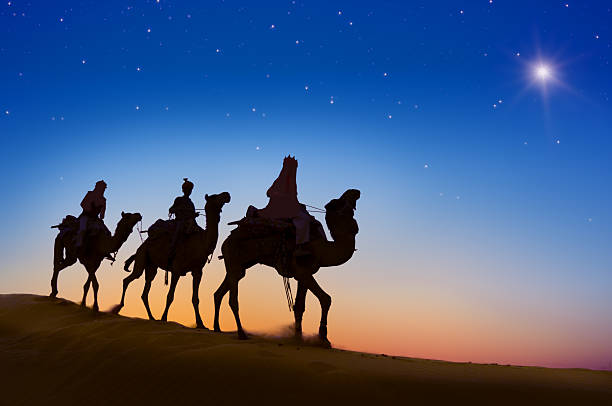
We all remember O. Henry’s The Gift of the Magi.
A short story that lingers from years ago. A story in which a young couple, poor in money but rich in love, give up their most valued belongings to buy gifts for each other.
Jim sells his treasured gold pocket watch to buy combs for Della’s long hair.
Della sells her glorious long hair – to buy a chain for Jim’s gold watch.
And just like that, the gifts — so thoughtfully chosen — are rendered useless. But Jim and Della end up with something far greater… A seal on their love so tender. So pure. So perfect.
And O. Henry transforms the story into a universal lesson on love and wisdom with the lines:
Of all who give gifts, these two were the most wise.
Of all who give and receive gifts, such as they are the most wise.
Everywhere they are the wise ones. They are the Magi.
*
Somehow, I never really understood what O. Henry meant by the “Magi.” Maybe that’s because, as Indians, the idea of Magi isn’t part of our cultural inheritance — we don’t find them in our childhood stories or the epics.
But a few days ago, I stumbled upon a quiet reference to them… I learned that the Magi were the holy men of ancient Persia, guardians of sacred fire, seekers of stars, known for their wisdom, stillness, and spiritual vision.
In time, they found their way into Christian tradition as the “wise men from the East” who followed a star to offer gifts to a child born in silence and straw (Jesus). And in that moment, they came to represent something universal: the sacred art of giving — not for show, not out of duty, but from a place of deep love, reverence, and humility.
*
O. Henry, in his simple tale about Jim and Della, reimagines the Magi beautifully. He reminds us that the Magi were the first to give gifts — and that this young couple, foolish in their sacrifice and radiant in their love, had somehow become the wisest of the Magi.
Something stirred within me as I read the words and I thought: Maybe – just maybe – like Jim and Della, we all carry the spirit of the Magi within us? And perhaps it is simply waiting to be awakened?
Ater all, the wisest gifts aren’t the ones that sparkle. They’re the ones that say: I see you. I am here. They are the small, unshowy acts when we share ourselves – our time, our attention, our presence.
A quiet smile of acknowledgment.
A simple thank you that speaks louder than any wrapped gift.
A listening ear when someone has no one else to turn to.
A kind word that steadies someone just when they need it most.
A caring hand on the shoulder.
A quick phone call that says, Just checking in.
A soft reaching out to someone caught in a dilemma.
We don’t need material wealth to show up in someone’s world even when one barely has the time. Or to notice the unspoken ~ A sigh that lingers too long. A smile that doesn’t quite reach the eyes. Or when we meet someone, to ask about things that truly matter to them ~ what they’re dreaming of, what’s been weighing on their heart, or what brought them joy lately.
Because wisdom lives in the softer details ~ Letting someone go ahead of you in a queue when they look worn down by the day. Or giving someone the benefit of the doubt, especially when they’re not at their best.
Sometimes, the wisest gift can be not giving anything at all. When silence can be more healing than advice. It’s in knowing that the other person doesn’t need a solution, but just needs us to listen and understand.
These gestures don’t make headlines. They won’t earn likes or applause. But then, when we give from the heart, we make the deepest impact. And in the quietest way possible, become more whole.
And maybe that’s what the Magi knew all along…
That every one of us holds the power to give gifts that don’t dazzle but quietly glow in the hearts of those around us, long after the moment has passed.
*
I hope to begin my journey in the footsteps of the Magi — not someday, but now.
Not with grandeur, but with a softened gaze, a listening ear, a moment of presence.
And each night, before I sleep, I will ask myself: What did I give today that cost nothing, yet meant something?
Because in these quiet reckonings — in these unspoken gifts of the heart —
we become, in our own way, a little more wise.
A little more like the Magi.


 Being Meeta